Revolutionizing Security Operations: The Power of Professional Drone Technology
Traditional drones face a critical limitation: battery life. While conventional systems require frequent landings and recharging, tethered drone solutions enable continuous surveillance operations that transform security protocols. The global security drone market reached $8.3 billion in 2024 and is projected to grow 12% annually through 2025, according to MarketsandMarkets research. Companies like elistair.com have pioneered systems delivering 24-hour flight capability, eliminating operational downtime that compromises mission effectiveness.
How Tethered Systems Transform Aerial Intelligence Gathering
Traditional drones face a fundamental limitation that has long constrained surveillance operations: battery life. While autonomous drones typically provide 30-45 minutes of flight time, tethered drone systems revolutionize this paradigm by maintaining continuous power supply through a physical connection to ground-based stations.
This might interest you : Unlocking remote work productivity: the ultimate guide to configuring your hp elite dragonfly with multiple monitors
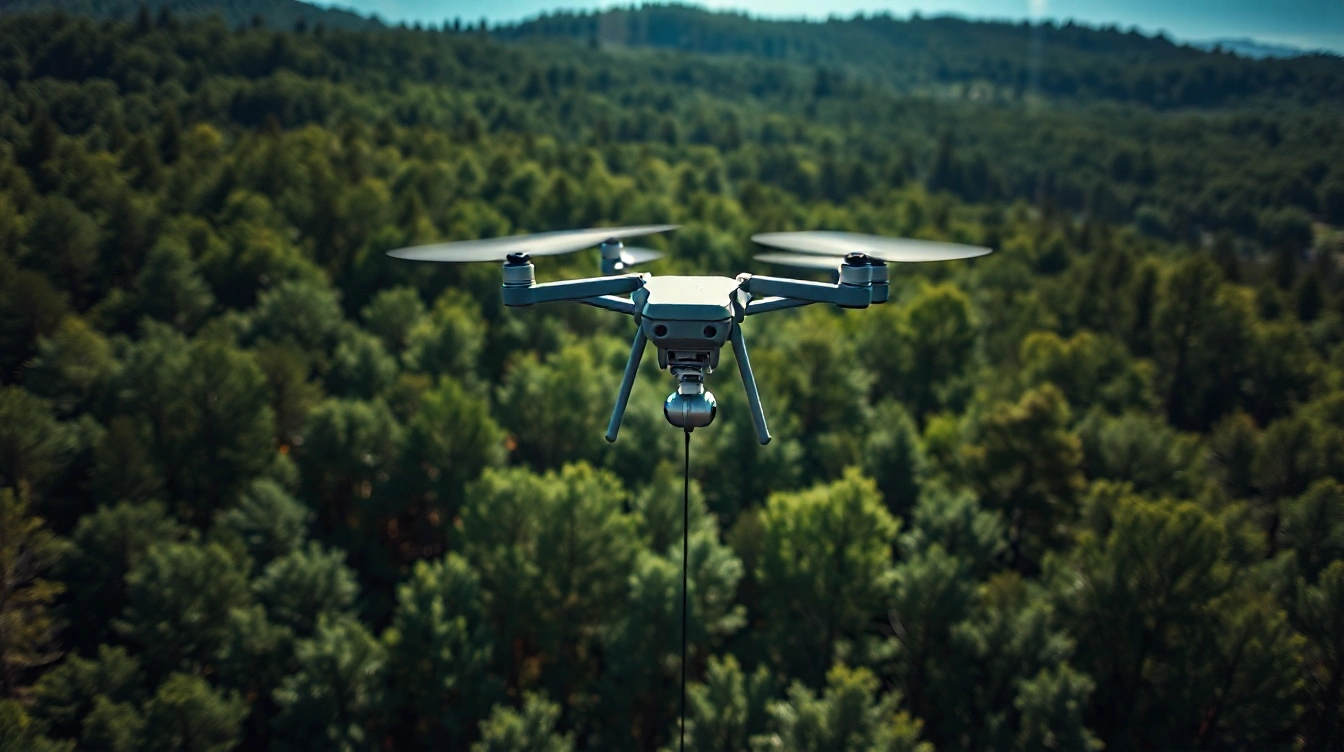
The principle is elegantly simple yet technologically sophisticated. A specialized tethering station on the ground supplies uninterrupted power and data transmission through a lightweight cable, enabling the drone to remain airborne indefinitely. This eliminates the operational disruptions caused by battery changes, landing procedures, and weather delays that plague traditional surveillance missions.
The KHRONOS system exemplifies this breakthrough technology, delivering true 24-hour continuous flight capability. Compatible with platforms like the DJI M350, these systems transform standard commercial drones into persistent surveillance assets. The tethering stations SAFE-T 2 and LIGH-T 4 provide robust power delivery while maintaining mobility for tactical deployments.
In parallel : Unleash gaming performance: optimizing your ryzen 9 5900x and rtx 3090 in a corsair 5000d airflow case
Real-world applications demonstrate the transformative impact. Border security agencies maintain constant monitoring of critical zones, while emergency responders coordinate disaster relief operations with uninterrupted aerial oversight. Industrial facilities protect perimeters around the clock, and law enforcement agencies conduct extended surveillance operations without the tactical vulnerabilities of battery-dependent systems.
Critical Applications Where These Systems Excel
Tethered drone systems have proven their value across diverse operational environments, from military theaters to urban security perimeters. Their ability to maintain continuous surveillance for 24 hours transforms traditional mission parameters and operational capabilities.
- ISR Operations: Military and intelligence agencies leverage 24-hour flight time for persistent area monitoring, border surveillance, and tactical reconnaissance. Deployments in conflict zones demonstrate superior situational awareness compared to traditional rotational drone missions.
- Perimeter Security: Critical infrastructure facilities, airports, and government buildings utilize tethered systems for uninterrupted boundary monitoring. The constant aerial presence acts as both detection tool and visual deterrent for potential threats.
- Emergency Response: First responders deploy these systems during natural disasters, search-and-rescue operations, and incident management. Continuous coverage enables real-time coordination and resource allocation throughout extended emergency situations.
- Event Surveillance: Large-scale gatherings, sporting events, and public ceremonies benefit from persistent overhead monitoring. The stable platform provides crowd management insights and security coordination for event durations exceeding typical drone battery life.
- Industrial Monitoring: Manufacturing facilities and construction sites use tethered drones for safety compliance, progress tracking, and quality assurance. The extended flight capability enables comprehensive documentation of multi-shift operations.
These applications showcase how unlimited flight time fundamentally changes surveillance strategies and operational effectiveness across sectors.
Technical Infrastructure and Equipment Requirements
The foundation of any successful tethered drone operation lies in robust technical infrastructure that ensures continuous power delivery and reliable data transmission. At the heart of this system are specialized tethering stations designed to maintain 24/7 operations while providing seamless integration with commercial drone platforms.
The SAFE-T 2 station serves as the standard deployment platform, engineered for environments requiring reliable continuous operation. This system delivers consistent power through a lightweight tether cable while maintaining data transmission capabilities for real-time surveillance feeds. For more demanding applications, the LIGH-T 4 represents the advanced solution, offering enhanced power capacity and extended operational range for complex mission requirements.
Both tethering stations achieve full compatibility with the DJI M350 platform, creating a seamless integration between commercial drone hardware and specialized tethering technology. The power delivery system operates through high-voltage transmission lines within the tether cable, converting power at the drone level to match aircraft requirements while maintaining flight performance characteristics.
Installation involves establishing a secure ground station connection, configuring power parameters, and calibrating the tether management system. The operational setup typically requires minimal technical expertise, with automated systems handling power regulation and cable tension management throughout extended flight missions.
Operational Advantages Over Traditional Battery-Powered Alternatives
The performance gap between tethered and battery-powered surveillance drones becomes evident in real-world operations. While conventional drones typically offer 20-30 minutes of flight time, tethered systems like KHRONOS provide unlimited operational duration, eliminating the costly cycle of battery swaps and mission interruptions that plague traditional surveillance programs.
Operational data from deployments across 65+ countries reveals significant cost reductions. Traditional battery-powered operations require multiple drone units to maintain continuous coverage, with teams spending up to 40% of their time on battery management. Tethered systems eliminate these logistics, reducing operational overhead by approximately 60% while delivering uninterrupted surveillance capabilities.
Signal stability represents another critical advantage. Battery-powered drones experience transmission degradation as power levels drop, creating blind spots during critical missions. Tethered platforms maintain consistent power delivery, ensuring stable video transmission and reliable communication links throughout extended operations. This reliability has proven essential in border security applications where mission continuity directly impacts operational effectiveness.
Field reports from government agencies consistently highlight the enhanced mission reliability of tethered systems, particularly in scenarios requiring sustained observation periods that exceed the limitations of conventional battery technology.
Implementation Strategies for Enhanced Situational Awareness
The successful deployment of tethered drone systems requires a methodical approach that considers both technical integration and operational readiness. Organizations must first assess their existing surveillance infrastructure to identify compatibility requirements and potential integration points with systems like SAFE-T 2 and LIGH-T 4 stations.
Technical implementation begins with establishing secure communication protocols between tethered platforms and command centers. The KHRONOS system’s 24-hour continuous operation capability necessitates robust data management frameworks that can handle sustained surveillance feeds without compromising system performance. Power infrastructure must support uninterrupted operations while maintaining redundancy for critical missions.
Operator training represents a crucial phase where personnel learn to maximize the situational awareness benefits of tethered drone technology. Comprehensive programs should cover system initialization, flight pattern optimization, data interpretation, and emergency protocols. Regular maintenance schedules ensure consistent performance, with preventive care extending equipment lifespan and mission reliability.
Elistair’s proven track record across 65+ countries demonstrates the importance of tailored implementation strategies. Their expertise in guiding governments and enterprises through deployment phases ensures that organizations can fully leverage tethered drone capabilities for enhanced operational security and intelligence gathering missions.
Frequently Asked Questions About Tethered Surveillance Solutions
What are the advantages of tethered drones over traditional battery-powered drones?
Tethered drones eliminate flight time limitations through continuous power supply, enabling 24-hour surveillance missions. They offer unlimited flight duration, reduced operational costs, and enhanced security for critical monitoring applications.
How long can a tethered drone stay in the air for surveillance missions?
With systems like KHRONOS, tethered drones maintain continuous flight operations for 24 hours or longer. The power tether eliminates battery constraints, allowing indefinite airtime for extended surveillance missions.
What applications are tethered drones best suited for in security operations?
Tethered surveillance excels in perimeter security, event monitoring, border patrol, crowd control, and emergency response. They’re ideal for situations requiring persistent aerial coverage without interruption.
How do tethered drone systems work and what equipment is needed?
The system includes a ground tethering station (SAFE-T 2 or LIGH-T 4), power cable, and compatible drone. The station provides continuous power and data transmission through the secure tether connection.
Are tethered drones compatible with popular drone models like DJI M350?
Yes, Elistair’s tethering stations are specifically designed for DJI M350 compatibility, ensuring seamless integration with this popular commercial drone platform for professional surveillance operations.
What services does Elistair provide for tethered surveillance implementations?
Elistair offers comprehensive support including system integration, technical training, maintenance services, and custom solution development. Their global presence ensures reliable support across 65+ deployment countries.